Line © OpenStreetMap contributors (ODbL), checked by Global Adventurer.
The walk
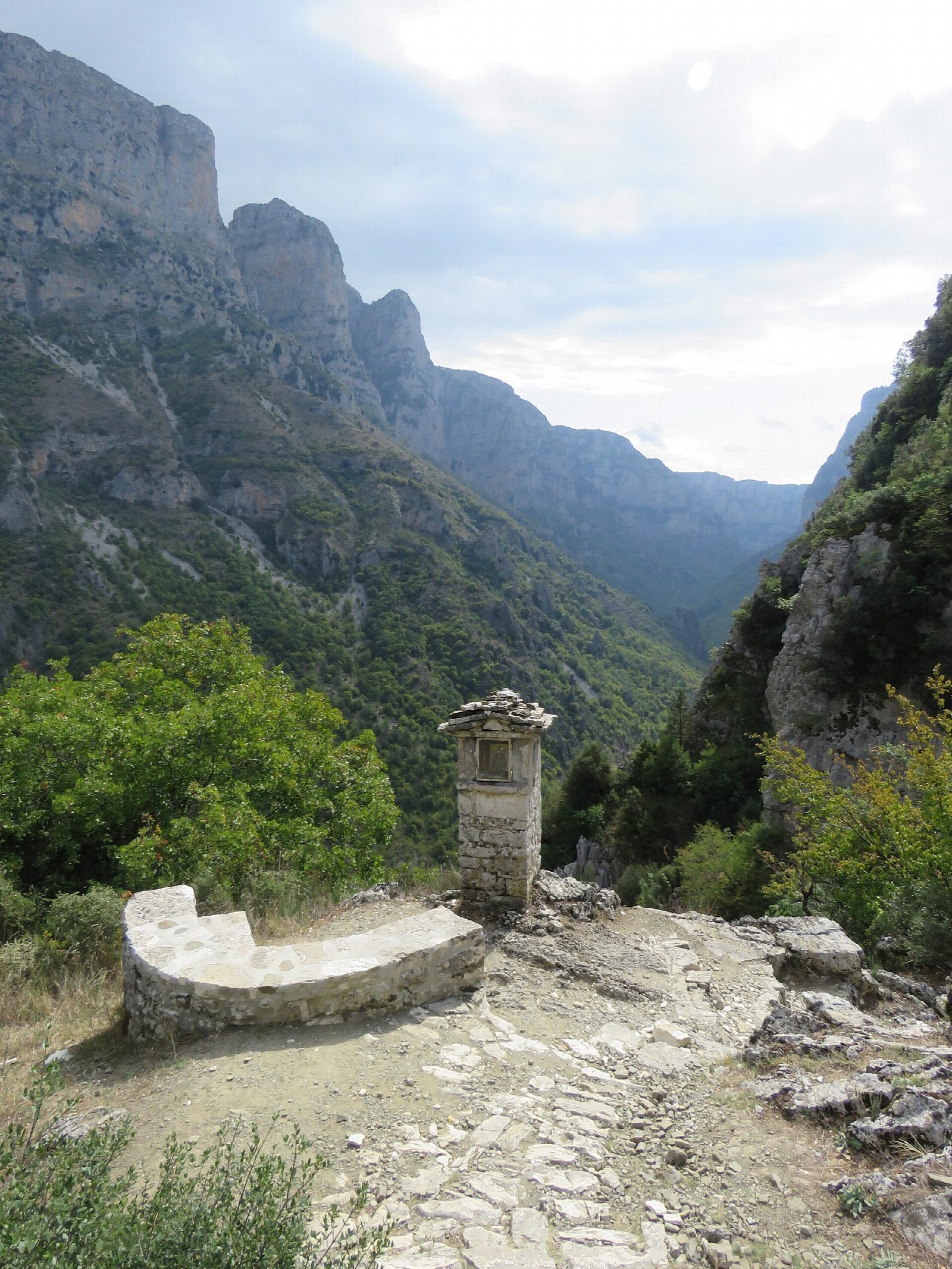
From Monodendri the path drops steeply on old stone steps into the Vikos Gorge, then follows its stony bed and wooded banks north-west between walls that rise hundreds of metres on either side. For much of the year the stream is dry, until near the lower end the Voidomatis river wells up clear and cold from springs in the floor of the gorge. From the springs a stone path climbs out to the village of Vikos, which looks back down the canyon.
It is 12.5 km one way with 487 m of ascent and 784 m of descent; allow about 5 hours. The grade is Moderate: a long, rough path over boulders and scree, with a steep descent at the start and a steep climb at the end.
The geopark recommends walking it from April to November, in walking boots. There is only one spring, about halfway, so carry plenty of water. The gorge lies in the core zone of the Vikos–Aoös National Park, and Guinness World Records lists it as the deepest gorge in the world for its width.
Leave the car in the village car park at Monodendri. Vikos is a long way round by road, so arrange a taxi back before you set out, or stay the night there.
Route drawn by Global Adventurer along OpenStreetMap paths (© OpenStreetMap contributors, ODbL), with figures worked out from it. Check the forecast and the ground on the day: paths change.
Good to know
- Guinness World Records lists Vikos as the deepest gorge in the world for its width
- The gorge runs for about 32 km and its walls rise up to 1,350 m
- Near its lower end the Voidomatis river wells up from springs in the bed of the gorge
- The gorge lies in the core zone of the Vikos–Aoös National Park
Getting there
Start: Monodendri, village car park · Free parking. 39.88154, 20.74902
Places to stay nearby
Rooms in and around Monodendri: Booking.com → Expedia →
Affiliate links: if you book, Global Adventurer earns a small commission at no cost to you.
Paths change, and the weather decides the day. The line and figures come from OpenStreetMap and our own checks; take a map, check the forecast, and turn back if it isn't right.