Line © OpenStreetMap contributors (ODbL), checked by Global Adventurer.
The walk
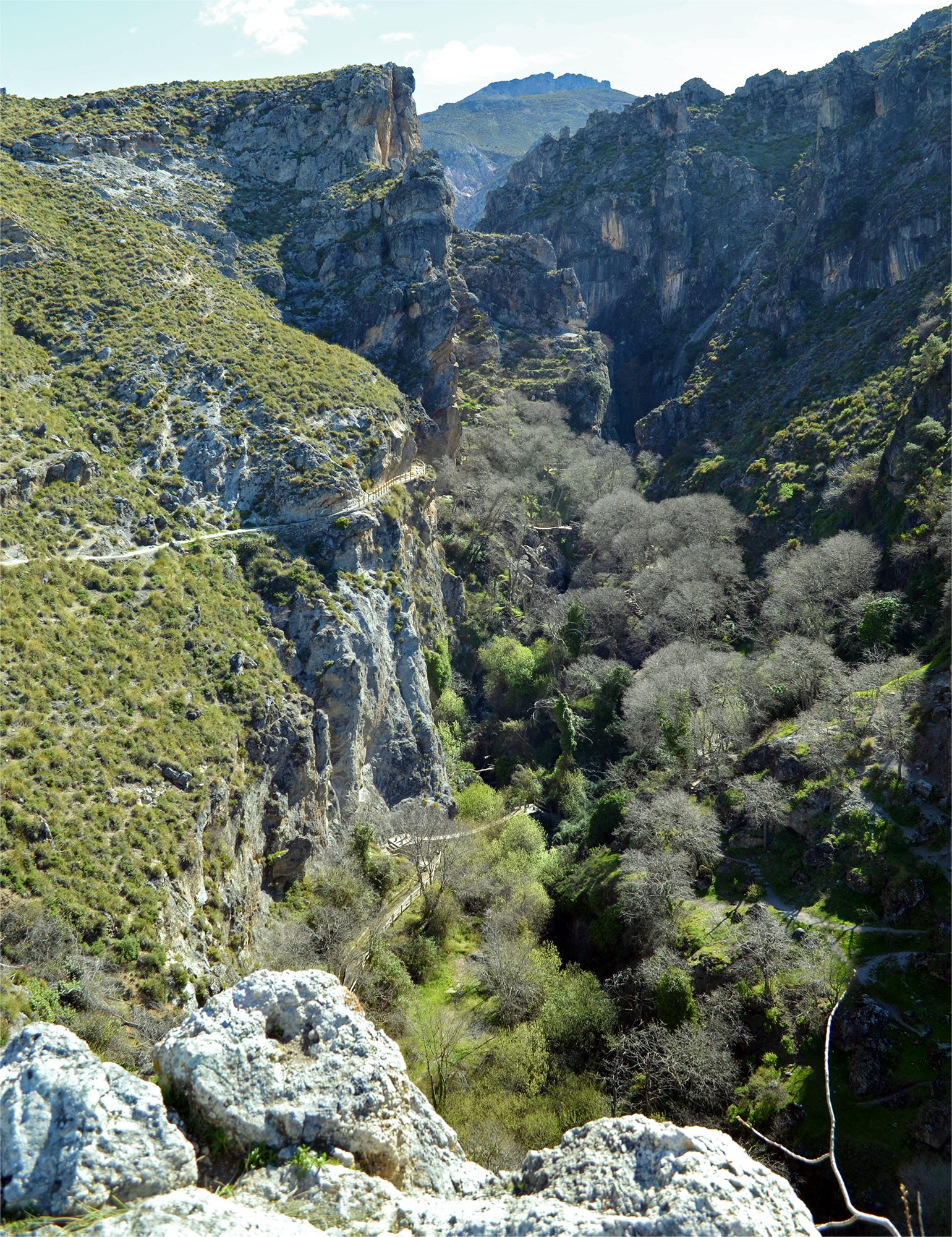
From the Plaza Baja in Monachil the route climbs by the old Purche road to the Era del Portachuelo and the Eras de los Renegrales, threshing floors set high to catch the wind, then drops to the Puente Colgante, a hanging bridge 63 m long. Beyond it the path squeezes through the gorge of Los Cahorros, under overhanging rock and past the Cueva de las Palomas, to the open valley at Las Azuelas and the Puente de las Chorreras. It comes back high on the sunny side by the Camino de la Solana to the Era del Portachuelo and the village.
It is 8.4 km round with 414 m of climbing; allow about 3½ hours. The grade is Moderate, but this is no stroll: in the gorge you crouch under the rock and use the handholds.
No more than four people may be on the long bridge at once. The rock is slippery when wet, the gorge is crowded at weekends, and in summer the return is hot. The town council says it neither waymarks nor maintains these paths.
In August 2026 the council closed the riverside path between the old tramway power station and the first short bridge after a rockfall. This loop does not use that stretch, but look out for notices.
Route drawn by Global Adventurer along OpenStreetMap paths (© OpenStreetMap contributors, ODbL), with figures worked out from it. Check the forecast and the ground on the day: paths change.
Good to know
- A hanging bridge 63 m long, then a gorge so narrow the path ducks under the overhanging rock
- Up by the old threshing floors above the village, back along the far side of the river
- Hands are needed in the gorge, and no more than four people may cross the long bridge at once
- Crowded at weekends: go early
Getting there
Start: Plaza Baja, Monachil. 37.13143, -3.53951
Places to stay nearby
Rooms in and around Plaza Baja: Booking.com → Expedia →
Affiliate links: if you book, Global Adventurer earns a small commission at no cost to you.
Paths change, and the weather decides the day. The line and figures come from OpenStreetMap and our own checks; take a map, check the forecast, and turn back if it isn't right.