Line © OpenStreetMap contributors (ODbL), checked by Global Adventurer.
The hike
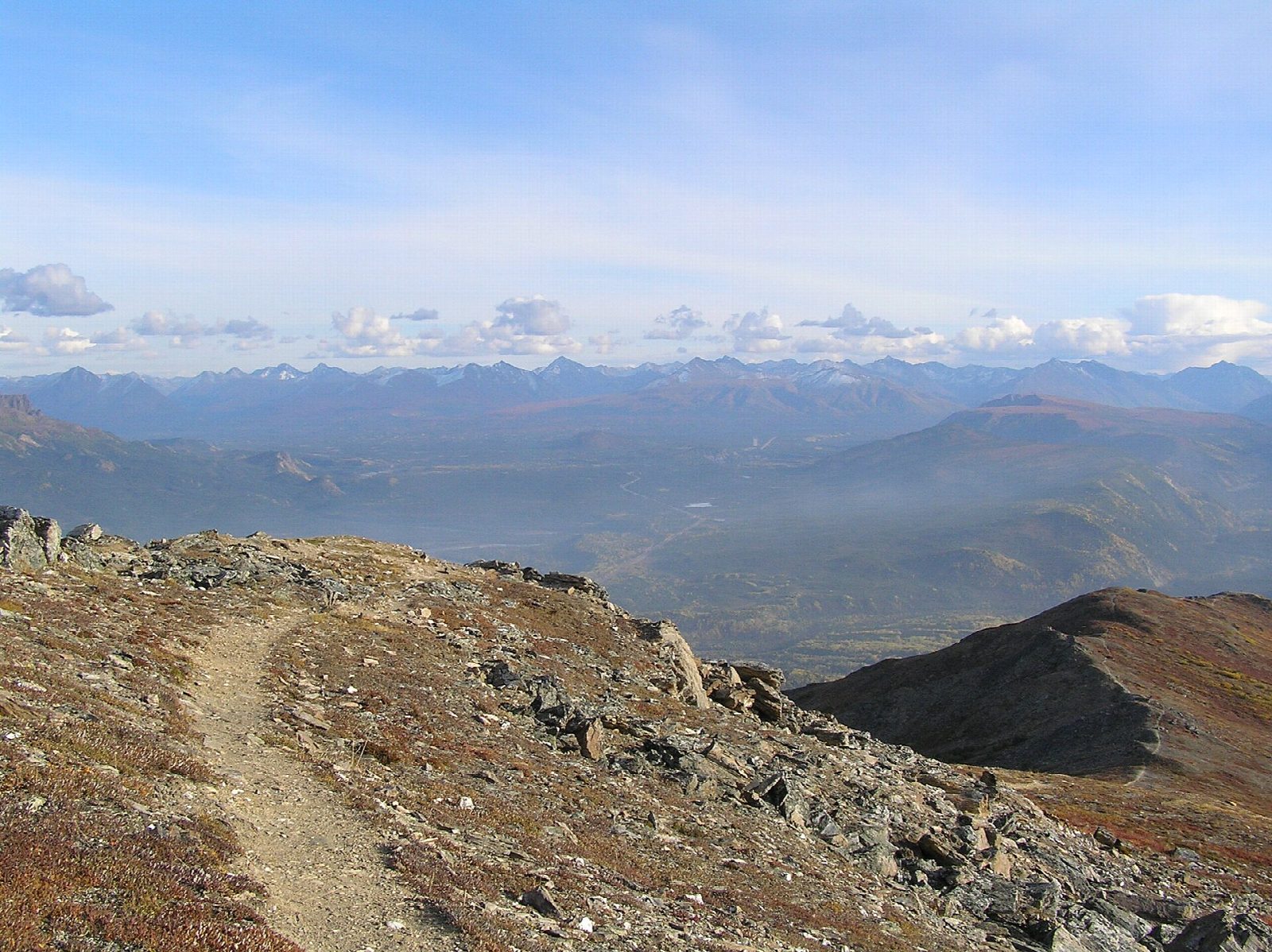
The walk starts at the Denali Visitor Center, at mile 1.5 of the Denali Park Road. Take the Taiga Trail from the visitor center for about half a mile to the junction with the Mount Healy Overlook Trail. The trail climbs at a steady, mild grade through spruce forest to some benches about halfway. Above them it steepens and climbs in switchbacks out above the tree line to the overlook, an open spot on a shoulder of Mount Healy with wide views to the south over the park entrance and the Nenana River valley. Return the same way.
It is 4.5 miles (7.2 km) round trip with 1,600 feet (487 m) of climbing; allow about 3½ hours. The grade is Moderate: a steady climb that gets steep in its upper half.
It is almost always windy at the overlook, so carry a warm layer. Going on along the ridge towards the summit, about 1,500 feet higher, is allowed but dangerous: people have died in falls on Mount Healy. This is bear and moose country: stay 300 yards from bears and 25 yards from moose.
The park charges $15 a person, valid for seven days. The trail can be walked all year, though snow comes early. In winter the visitor center is shut and the Murie Science and Learning Center nearby takes its place.
Route drawn by Global Adventurer along OpenStreetMap paths (© OpenStreetMap contributors, ODbL), with figures worked out from it. Check the forecast and the ground on the day: paths change.
Good to know
- From the park entrance through spruce forest to an open, windy shoulder of Mount Healy
- Wide views south over the Nenana River valley and the park entrance area
- People have died going on from the overlook toward the summit: turn back here
Getting there
Start: Denali Visitor Center. 63.73132, -148.91788
Places to stay nearby
Rooms in and around Alaska: Booking.com → Expedia →
Affiliate links: if you book, Global Adventurer earns a small commission at no cost to you.
Paths change, and the weather decides the day. The line and figures come from OpenStreetMap and our own checks; take a map, check the forecast, and turn back if it isn't right.
